Stuck Between Now and Then: How July 22 Is Quietly Stealing the Present From Us
Here's a question worth sitting with for a second: When did you last actually enjoy a Tuesday?
Not a Tuesday that was adjacent to something big. Not a Tuesday you were using to prep for something else. Just a regular, unremarkable Tuesday that you showed up for fully — no mental footnotes about what's coming, no background hum of anticipation pulling your attention somewhere else.
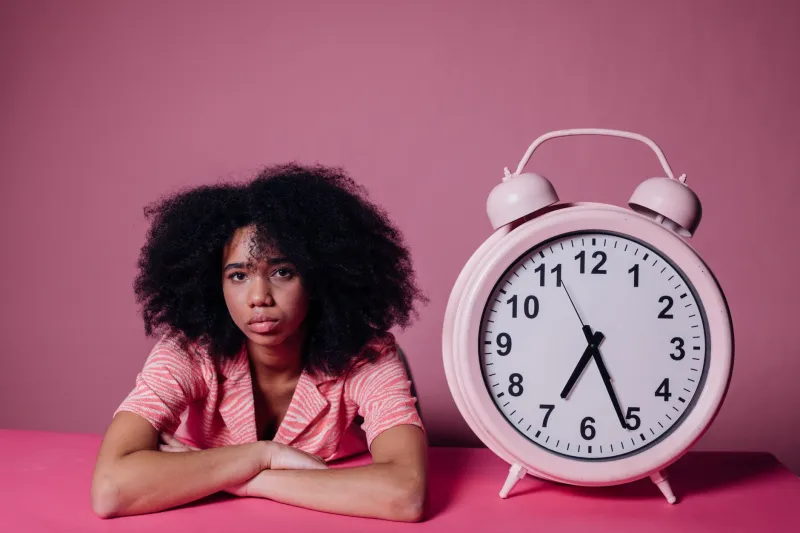
For a lot of people right now, that kind of Tuesday feels almost impossible. And according to several psychologists, July 22 is at least partly to blame.
The Mind Doesn't Do Well With Open-Ended Anticipation
Human brains are wired for forward motion. We set goals, we plan, we project. That's not a bug — it's a feature that's kept our species alive and reasonably organized for thousands of years. But there's a threshold, researchers say, where healthy anticipation tips into something more disruptive.
Dr. Miriam Okafor, a clinical psychologist based in Chicago who focuses on behavioral patterns in digital culture, has been paying close attention to what she describes as a surge in what clinicians call temporal dissociation — a state where a person's psychological presence becomes unmoored from their actual present circumstances.
"We've always seen this around major life events," she told us. "Weddings, graduations, medical diagnoses. But what's different now is the scale and the ambiguity. When something like July 22 becomes a cultural focal point — and the specific what of it remains open to interpretation — the brain doesn't have a clean target. It just... idles. And idling is exhausting."
Exhausting, and apparently contagious.
When Waiting Becomes a Lifestyle
Scroll through any major platform right now and the July 22 conversation is everywhere — theories, countdowns-within-countdowns, community threads dissecting every possible meaning of the date. It's become a kind of shared ambient noise, and that noise has a way of following people into their offline lives.
Take Marcus, a 34-year-old graphic designer from Austin who asked us not to use his last name. He describes the past several weeks as feeling "slightly out of focus."
"It sounds dramatic, but I've noticed I'm not really finishing things," he said. "I'll start a project, or make plans with friends, and there's this part of my brain that keeps filing everything under 'before July 22.' Like nothing I do right now fully counts yet."
That framing — before July 22 — is something therapists are hearing more often than you might expect. And it points to a real psychological phenomenon: the brain's tendency to mentally partition time around anticipated events, treating the interlude as a kind of holding pattern rather than actual life.
The Cost of Living in Perpetual 'Almost'
The problem with holding patterns is that they're not neutral. They have a cost.
Psychologists use the term affective forecasting to describe how we predict our future emotional states — and research consistently shows we're bad at it. We overestimate how good the big moment will feel, and we underestimate how much we'll have missed in the meantime.
Dr. Priya Shenoy, a therapist in Seattle who works primarily with adults experiencing anxiety and what she calls "calendar-based avoidance," puts it plainly: "When people orient their entire sense of meaning around a future date, they're essentially writing off everything between now and then. And that's not a small thing. That's their life."
She's seen clients defer difficult conversations, postpone creative projects, even delay medical appointments — all with some version of let me just get past July 22 first as the rationale. The date becomes a psychological permission slip: once it arrives, real life can resume.
Except, of course, it doesn't quite work that way.
Countdown Culture and the Collapse of the In-Between
This isn't entirely new. Americans have always had a complicated relationship with anticipation — think of the cultural machinery that builds around Super Bowl season, election cycles, or the annual ritual of Black Friday hype that starts in September. We're a culture that loves a buildup.
But something about the July 22 countdown feels different in its intensity, and part of that may be structural. Social media algorithms reward engagement with anticipated events, which means the more you interact with July 22 content, the more of it you see — creating a feedback loop that keeps the date perpetually front of mind. It's not just that people are excited. It's that the platforms they use are actively incentivizing them to stay in that excited, forward-leaning state.
"The digital environment has essentially learned to profit from anticipation," says Dr. Okafor. "And the side effect of that is that we never really come down. We never get to just be in the present moment, because the present moment isn't what the algorithm is optimizing for."
So What Do You Actually Do About It?
None of this is meant to be a wet blanket on the countdown itself. Anticipation, in healthy doses, is one of life's genuine pleasures. There's something real and human about waiting for something together — about the shared electricity of a date on the horizon.
But the psychologists we spoke with are pretty aligned on a few practical suggestions for people who feel like the countdown has started eating their present:
Impose artificial endpoints. Give yourself specific windows for engaging with July 22 content — say, 20 minutes in the evening — rather than letting it bleed into every idle moment.
Name what you're deferring. If you catch yourself thinking I'll deal with that after July 22, write it down. Making the deferral explicit often breaks its power.
Practice what therapists sometimes call 'present anchoring.' Identify one thing happening right now — a meal, a conversation, a walk — and commit to being fully in it, without the background hum of what's coming.
Let July 22 be one thing, not everything. Whatever it turns out to be, it's a moment. Your life is made of the days on either side of it.
The Countdown Is Real. So Is Right Now.
July 22 is coming. That's not in question. But so is tomorrow morning, and the coffee you'll drink, and the conversation you'll have, and the small unremarkable Tuesday that might turn out to matter more than you expected.
The countdown is a fun thing. It's supposed to be. But if you've noticed that the days between now and then feel like filler — like a loading screen between where you are and where you're trying to get — that's worth paying attention to.
Because the moment everyone's been waiting for? It's also, quietly, right now.