Patience Is a Skill — And the July 22 Countdown Might Be Killing It
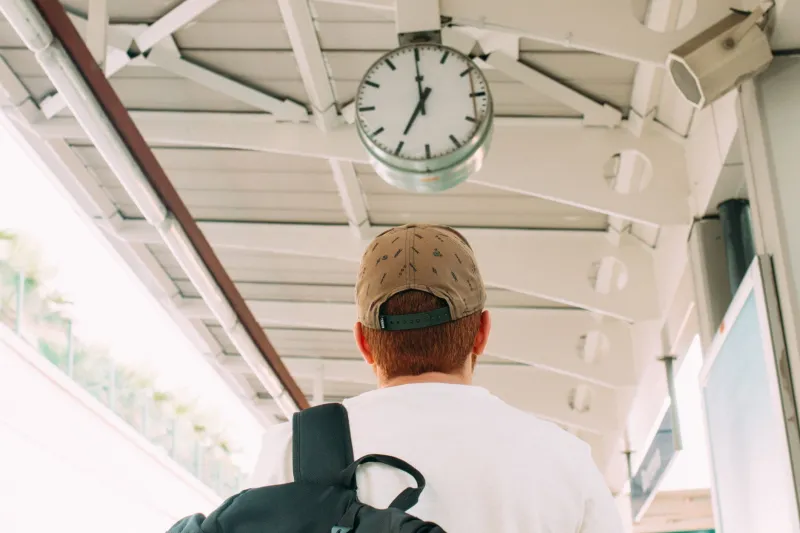
There's a clock on your phone. Probably one on your laptop, too. Maybe you've even bookmarked a live countdown timer ticking toward July 22, 2025. And honestly? Same. There's something almost magnetic about watching those digits shrink — days becoming hours, hours becoming minutes, the whole thing collapsing toward a single, electric moment.
But here's the thing nobody's really talking about: all that ticking might be costing us something.
Not money. Not sleep (well, maybe a little sleep). We're talking about patience — the deeply human capacity to sit with uncertainty, to let something unfold on its own schedule, to find meaning in the space between now and whatever comes next. And according to a growing number of psychologists and behavioral researchers, that skill is quietly eroding. July 22 isn't the cause, exactly. But it's one very loud, very visible symptom.
We've Turned Anticipation Into a Sport
Countdowns have always been part of American culture. New Year's Eve. The Super Bowl. A kid marking off days until Christmas on a construction-paper chain. That kind of anticipation is healthy — even joyful. It builds excitement, creates shared rituals, and gives us something to look forward to during the grind of ordinary life.
But the July 22 phenomenon is something a little different. It's not just that people are excited. It's that the countdown itself has become the main event. Social feeds are flooded with speculation threads, fan theories, and hourly updates. Comment sections are essentially support groups for people who cannot stop thinking about one specific date. The waiting has been gamified, monetized, and turned into content.
When anticipation becomes a performance, something shifts. Instead of sitting quietly with excitement — letting it simmer — we're constantly externalizing it, quantifying it, comparing it. "I've been waiting longer than you." "My theory is better." "Only 12 days, 4 hours, and 37 minutes left." The experience of waiting gets replaced by the experience of competing at waiting.
The Neuroscience of the Countdown Trap
Here's where it gets interesting. Research on dopamine and reward anticipation suggests that our brains actually get a chemical hit from the expectation of a reward — sometimes nearly as strong as the reward itself. That's why countdowns feel so good. You're essentially getting a low-grade dopamine drip every time you check the clock, read a new rumor, or refresh your feed.
The problem? Your brain starts to crave that drip. And the more you feed it, the harder it becomes to tolerate the normal, unquantified waiting that life requires. The kind where there's no countdown clock. No hype cycle. No community of millions speculating alongside you.
Dr. Laurie Santos, a Yale psychologist known for her work on happiness and human behavior, has noted in various interviews that modern life already pushes us toward "miswanting" — craving things we think will make us happy but often don't deliver the payoff we expected. Hyper-specific anticipation events accelerate that cycle. We become so focused on the destination that we lose our capacity to appreciate — or even tolerate — the journey.
In short: the July 22 countdown might be training us to be worse at everything that isn't July 22.
Instant Gratification's Quieter Cousin
Most conversations about patience and modern life focus on instant gratification — the Amazon same-day delivery mindset, the skip-intro button, the five-second attention span. And yes, all of that is real. But countdown culture presents a slightly different problem.
It's not that we want everything immediately. It's that we want everything on a known, fixed, heavily promoted schedule. We've essentially outsourced our sense of timing to external events. Can't tolerate open-ended uncertainty? Fine — here's a date. Here's a clock. Here's a community to obsess with. The discomfort of not-knowing gets replaced by the comfort of a very specific, very trackable not-yet.
That's a subtle but meaningful distinction. True patience — the kind that builds resilience, creativity, and emotional depth — requires sitting with genuine uncertainty. It means not knowing when something will happen, or even if it will happen, and finding a way to be okay in that space. Countdown culture, for all its communal warmth, is essentially a workaround for that discomfort rather than a solution to it.
What a Generation Raised on Hype Cycles Actually Learns
If you're a millennial or older, you can probably remember waiting for things with no timeline attached. Waiting to hear back about a job. Waiting to see if a crush would call (on a landline, no less). Waiting for a movie to come out with nothing but a poster and a vague "coming soon."
That waiting was uncomfortable. But it also built something. Tolerance for ambiguity. The ability to stay present even when the future felt uncertain. A kind of internal steadiness that didn't depend on external cues.
Gen Z and younger millennials have grown up in a world where nearly every major cultural moment comes pre-packaged with a countdown, a trailer, a leak cycle, and a Reddit thread. July 22 is, in some ways, the apotheosis of that culture — a date so hyped, so precisely anticipated, that the buildup has become its own self-sustaining ecosystem.
That's not inherently bad. But it does raise a genuine question: if you've always had a clock to watch, do you know how to wait without one?
Finding the Pause Inside the Countdown
None of this is an argument for ignoring July 22 or pretending the hype isn't fun — because it absolutely is. Shared anticipation is one of the few things that still manages to unite enormous swaths of the country around something that isn't a disaster or a political fight. That's genuinely valuable.
But maybe there's something worth trying between now and the big day: practicing the other kind of waiting. Closing the countdown tab for a few hours. Sitting with the excitement without feeding it. Letting July 22 be something you're looking forward to rather than something you're managing.
The moment is coming whether you watch the clock or not. And if the research on anticipation and reward is right, the people who let themselves be a little surprised — who don't spend every day pre-living the experience — might actually enjoy it more when it arrives.
The countdown is real. The excitement is real. But so is the quiet skill of learning to wait without needing to know exactly how long.