Clearing Out Before the Big Day: How July 22 Is Quietly Reshaping What Americans Buy, Toss, and Give Away
Most of us know the feeling of cleaning your apartment before a big party. You're not hosting anyone who cares about your junk drawer, but something about the occasion makes you want a fresh start. Now imagine that same instinct playing out across millions of households simultaneously — not because of a party, but because of a date on a calendar.
That's essentially what's happening right now, and July 22 is at the center of it.
The countdown to July 22 has taken on a life well beyond whatever the day itself actually delivers. For a growing segment of Americans, the buildup has become a psychological marker — a before-and-after line that's prompting some genuinely surprising behavior around money, possessions, and generosity.
The Pre-Event Purge Is Real
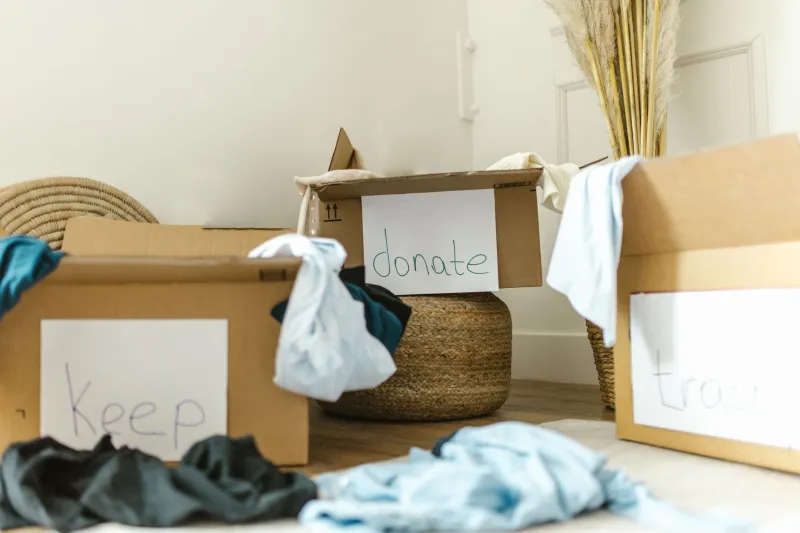
Talk to anyone who's been swept up in the July 22 energy and you'll start noticing a pattern. People are cleaning out closets. Listing old stuff on Facebook Marketplace. Dropping boxes off at Goodwill. There's a loosely defined but widely felt sense that if something big is coming, you should arrive at it lighter.
Consumer psychologists have a name for this kind of behavior: anticipatory decluttering. The idea is that a looming event — especially one with cultural weight or personal significance — triggers a desire to mentally and physically clear space for what's ahead. It's the same reason people deep-clean before New Year's Eve or reorganize their home office before starting a new job.
July 22 has apparently earned enough cultural gravity to set this process in motion at scale.
Donation centers in several major metro areas have quietly reported upticks in drop-offs over the past several weeks. Thrift chain managers in cities like Chicago, Atlanta, and Phoenix have noted that the volume feels more like a post-holiday surge than a typical midsummer slowdown. Nobody's putting July 22 on the intake forms, obviously, but the timing is hard to ignore.
Spending Habits Are Shifting, Too
Here's where it gets interesting. The pre-event purge isn't just about getting rid of things — it's also changing what people are choosing not to buy.
Anecdotally, a number of people caught up in the July 22 countdown describe a kind of purchase hesitation they didn't have before. The logic goes something like: Why buy this now if something better — or more meaningful — might be available after July 22? It's a holding pattern, a consumer pause button.
This is particularly visible in categories adjacent to whatever July 22 is expected to involve. People speculating about a major product drop, for instance, are notoriously reluctant to spend on comparable items in the weeks leading up to the announcement. Why buy a good version of something when the best version might land in a matter of weeks?
Retailers who rely on impulse buying have started feeling this friction. Cart abandonment rates — the percentage of online shoppers who fill a cart and then walk away — tend to climb in the lead-up to high-anticipation events. The countdown mentality essentially gives people a socially acceptable reason to wait, and waiting is the enemy of a closed sale.
The Secondary Market Gets a Quiet Boost
All that stuff people are clearing out has to go somewhere, and not all of it ends up at the Salvation Army. Resale platforms like eBay, Poshmark, Mercari, and Depop have seen consistent activity from people offloading items ahead of what they perceive as a turning point. Whether that turning point is tied to July 22 specifically or just the general energy of a busy summer is hard to parse — but the behavior is there.
What's notable is the type of items showing up. It's not just the usual cast-offs. People are selling things they actually like but have decided no longer fit the life they're expecting to live post-July 22. Aspirational decluttering, you might call it. The countdown isn't just clearing physical space — it's clearing psychological space for a version of themselves they're quietly planning on becoming.
That's a lot of weight for a date to carry. And yet here we are.
Charitable Giving Gets an Unexpected Nudge
Beyond the resale market, there's a softer side to this phenomenon worth acknowledging. Some of the pre-July 22 purging is landing in genuinely charitable places — and not just through thrift store donations.
Online giving platforms have noted modest but real increases in one-time donations from individuals who describe themselves as "simplifying" or "making room." There's a thread on several popular Reddit communities where people are sharing their pre-July 22 donation lists, treating the act of giving away as part of the ritual of anticipation itself.
This is a genuinely interesting wrinkle. Countdown culture, which is often criticized for fueling consumerism and FOMO, appears to have a pro-social edge case. When the anticipation is strong enough and lasts long enough, it creates a reflective space where people reassess not just what they own but what they actually need — and who else might benefit from the rest.
A Reset Button in Disguise
Maybe the most honest way to describe what July 22 is doing to American consumer behavior is this: it's functioning as a permission slip.
For a lot of people, the friction of daily life makes it hard to stop and ask whether their spending habits are actually working for them. There's always a reason to defer that question — another bill, another distraction, another thing to buy. But a countdown with cultural momentum gives people a natural stopping point. A reason to look around and ask: Do I actually want all this stuff? Am I spending money in ways that reflect what I care about?
The answers, predictably, vary. Some people use the moment to finally unload the exercise equipment they bought in 2021. Others decide to skip a planned vacation purchase in favor of waiting to see what July 22 brings. A few are redirecting discretionary funds toward causes they care about, treating the countdown as a kind of personal financial audit.
None of this was probably the intended effect of whatever July 22 is building toward. But it's happening anyway, organically, because that's what genuine cultural moments do — they ripple out in directions nobody planned for.
What It Says About Us Right Now
There's something quietly telling about a single date prompting this much internal recalibration. Americans are, by most measures, exhausted by choice overload and overwhelmed by stuff. The average U.S. household contains hundreds of thousands of items. Consumer debt is at historic highs. Regret over purchases is practically a national pastime.
Into that context, a countdown arrives — something to look forward to, something to orient around — and a meaningful chunk of the population responds not by buying more, but by clearing the decks. By reconsidering. By giving things away.
July 22 might end up being remembered for a lot of things. But one of its stranger, more human legacies might just be the closets it emptied and the donations it quietly inspired along the way.
Not bad for a date on a calendar.