Ticking Toward Something: The Hidden Reason Countdowns Give Us a Grip on Life
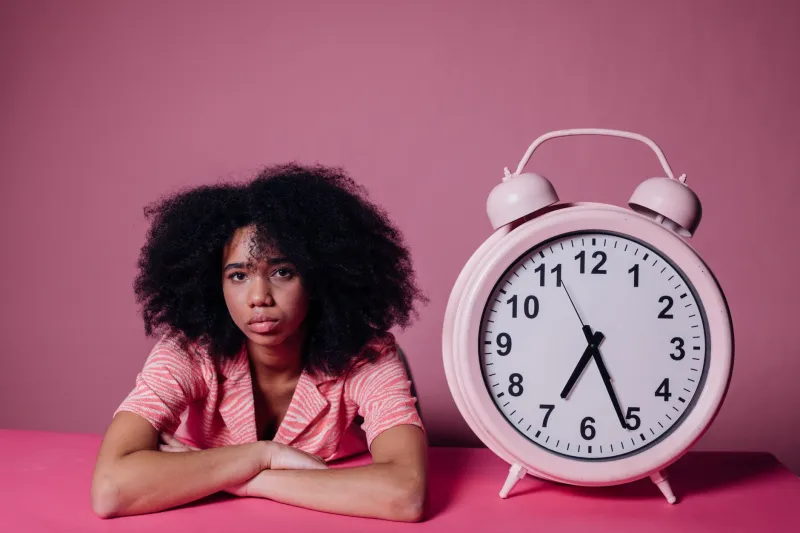
Somewhere in America right now, someone is checking how many days, hours, and minutes remain until July 22. Maybe that someone is you. And if you've noticed that glancing at that countdown clock feels oddly satisfying — almost calming, even — you're not alone, and you're definitely not imagining things.
Because here's the thing: the countdown itself might matter more than whatever's at the end of it.
The Brain Loves a Finish Line
Humans are, at their core, goal-oriented creatures. We evolved to track time, anticipate outcomes, and organize our behavior around future events. But in an era of infinite scroll, round-the-clock news cycles, and a general cultural sense that everything is just sort of... happening at us, that ancient wiring doesn't always get what it needs.
Enter the countdown.
"What a countdown does, psychologically speaking, is transform an abstract future into something concrete and manageable," says Dr. Lisa Feldman, a behavioral psychologist based in Chicago who studies how people regulate emotion through environmental cues. "When you can see the number shrinking, you feel like you're moving toward something. That movement — even when it's passive — registers in the brain as a form of agency."
Agency. That word keeps coming up when you talk to researchers about why countdowns resonate so deeply with people. In a world where most of us feel like we have very little control over the big stuff — the economy, the news, the general vibe of society — having a date on the calendar that you're actively tracking gives you something to do with your anticipation.
Structure in a Structureless World
There's a broader context worth acknowledging here. Post-pandemic life reshuffled a lot of Americans' internal calendars. The rituals and rhythms that used to organize daily life — the school year, the work commute, the regular social calendar — got scrambled in ways that many people are still sorting out. Therapists across the country have noted a rise in what some are calling "temporal disorientation" — a vague but persistent feeling that time is slippery and hard to grip.
Countdowns, it turns out, are a remarkably effective antidote to that.
"When you anchor yourself to a specific date, you're essentially building a scaffolding around your experience of time," explains Dr. Marcus Webb, a cognitive scientist at the University of Michigan who studies anticipation and reward. "It gives the days between now and that date a kind of meaning they might not otherwise have. You're not just living through Tuesday — you're living through Day 47 of the Countdown."
That reframing is more powerful than it sounds. Research in behavioral science consistently shows that people are more productive, more emotionally stable, and more socially connected when they have a clear upcoming event to orient around. The event doesn't even have to be particularly significant. A birthday, a season premiere, a product drop — the specificity of the date matters more than the magnitude of what's happening on it.
The Community Component
One of the underrated elements of a shared countdown — and the July 22 phenomenon has become genuinely shared, with millions of people tracking the same clock — is what it does to our sense of belonging.
Humans are social animals who historically organized their lives around communal events: harvests, festivals, religious observances. These weren't just logistical anchors; they were identity anchors. You knew who you were, in part, because you knew what you were all waiting for together.
In a fragmented media landscape where it increasingly feels like everyone is watching a different show, reading a different news feed, and living in a different reality, a single shared date cuts through the noise in a way that's almost nostalgic.
"There's genuine social bonding that happens around anticipation," Dr. Feldman notes. "When you and a stranger are both counting down to the same thing, you have an instant point of connection. That's not trivial. Human beings need those connection points, and they're harder to come by than they used to be."
Scroll through any social platform right now and you'll see this playing out in real time. The speculation, the theories, the memes, the "are you ready for July 22" posts — all of it is people using a shared countdown as social glue. The content is about the date, but the function is community.
Anticipation Is Its Own Reward
Here's where it gets a little counterintuitive: research suggests that in many cases, the anticipation phase of an event is actually more pleasurable than the event itself. Studies on dopamine — the neurotransmitter most associated with reward and motivation — show that the brain often releases more of it during the buildup to a desired outcome than during the outcome itself.
In other words, the countdown might literally be the best part.
"Anticipation is a kind of sustained pleasure," says Dr. Webb. "It's low-stakes enjoyment. Nothing can go wrong yet. The thing you're excited about still has the potential to be everything you hoped for. That uncertainty, paradoxically, is part of what makes it feel so good."
This might explain why people who are deeply invested in the July 22 countdown seem genuinely happy right now, even though nothing has happened yet. The waiting is the experience. The clock ticking down isn't an obstacle to the payoff — it is the payoff, at least in part.
Control You Can Actually Feel
Let's come back to that word: agency. Because ultimately, that might be the most important thing a countdown gives us.
We can't control inflation. We can't control the weather, the political climate, or whether our favorite team makes the playoffs. But we can watch a countdown clock. We can mark the days. We can prepare, speculate, share, and anticipate. And in doing all of that, we're exercising a kind of micro-control over our own experience of time that feels genuinely meaningful.
"There's a reason people set timers when they're anxious," Dr. Feldman points out. "Putting a boundary around uncertainty — saying 'this ends at this specific moment' — makes the uncertainty bearable. Countdowns do that on a larger scale."
July 22 is coming whether we count down to it or not. But for millions of Americans, the act of counting — of watching the numbers shrink, of being part of a collective moment of anticipation — is doing real psychological work. It's making the world feel a little more ordered. A little more navigable. A little more ours.
And honestly? In 2025, that's not nothing.
The clock is still ticking. And maybe that's exactly the point.