Why July 22 Might Be the Best Excuse You've Ever Had to Finally Get Started
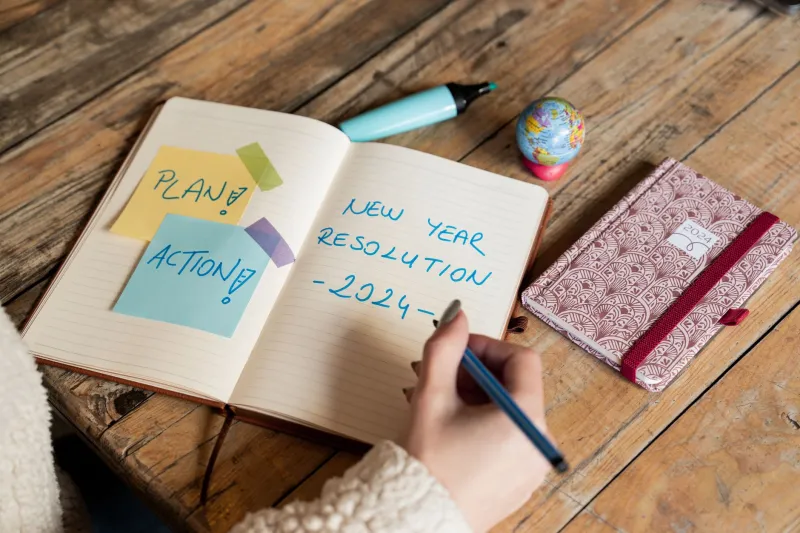
Here's something nobody really talks about in all the July 22 hype: a lot of people aren't just counting down to the moment. They're counting down to their moment.
The guitar collecting dust in the corner. The half-finished business plan saved to a desktop folder called "IDEAS (REAL)." The running shoes still in the box. Somewhere between the speculation threads and the watch parties, a quieter phenomenon has taken hold — Americans are using July 22 as a personal launch date. And it's worth asking whether that's genius or just a really elaborate stall tactic.
The "Fresh Start" Trick Your Brain Already Knows
Behavioral psychologists have a name for this. It's called the Fresh Start Effect, and it was formally documented by researchers at the Wharton School back in 2014. The basic idea: people are significantly more likely to pursue goals right after a meaningful temporal landmark — a birthday, a new year, a Monday, the first of the month. These moments create a psychological reset, a sense that the messy, unmotivated version of yourself belongs to the before, and the better version starts now.
"Any date that feels culturally significant can function as one of these landmarks," says Dr. Priya Mehta, a behavioral psychologist based in Chicago who works with corporate teams on motivation and habit formation. "It doesn't have to be your personal milestone. If the whole country is treating a date like it matters, your brain tends to absorb that energy and assign it meaning."
In other words, July 22's cultural weight — whatever the specific reason behind the anticipation — is doing some of the psychological heavy lifting for you. You're borrowing momentum from a collective moment and pointing it at your own goals.
Countdown Culture as Permission Structure
There's something else going on here that's a little harder to articulate but very easy to recognize: countdowns give people permission to wait, and then permission to begin.
This might sound counterintuitive. Shouldn't you just start? In theory, yes. In practice, human beings are remarkably good at finding reasons to delay. And one of the sneakiest delay tactics is the open-ended "I'll start when things settle down" plan — which, for most of us, means never.
A countdown flips that script. It sets a hard boundary on the waiting period. You're not procrastinating indefinitely; you're preparing. You're not avoiding the project; you're timing your launch. The countdown itself becomes a structured runway.
Jeremy Calloway, a productivity coach based in Austin, Texas, has noticed this pattern accelerating among his clients as July 22 has approached. "I've had at least a dozen people tell me they're waiting until after July 22 to start something new," he says. "And honestly? I don't always push back on it. Sometimes the framing matters more than the timing. If someone genuinely feels like they'll have more mental bandwidth after a big cultural moment passes, that's not nothing."
But Calloway is also careful to draw a line. "There's a difference between strategic timing and chronic delay with a new costume on. If July 22 comes and goes and the project still hasn't started, that tells you something."
The Danger of the Infinite Runway
Here's where it gets complicated. The same psychological mechanism that makes July 22 feel like a powerful starting line can also make it feel like a movable one.
We've all done this. The diet starts Monday. The side hustle launches in January. The novel begins after the holidays. Each of these dates arrives, life intervenes, and the landmark quietly shifts forward. The project doesn't die — it just lives permanently in the future, always one more milestone away from becoming real.
Dr. Mehta calls this "landmark hopping" — and she says it's one of the more insidious forms of productive-sounding procrastination. "The person genuinely believes they're going to start. They feel the motivation building. But they've unconsciously structured things so that the start is always just ahead of them, never beneath their feet."
The question, then, isn't really whether July 22 is a good date to start something. It's whether you are someone who uses milestone dates as fuel or as cover.
How to Tell the Difference
Productivity researchers suggest a few practical ways to figure out which camp you're in.
Have you done any prep work? If July 22 is your launch date, the days leading up to it should involve real groundwork — researching, gathering materials, clearing your schedule, telling someone about your plans. If you've done none of that and the date is tomorrow, the countdown probably isn't functioning as motivation.
Is this the first time you've set this particular starting line? If you were going to start this project on January 1st, then your birthday, then "after things calm down at work," and now July 22 — that pattern is worth examining honestly.
Do you have a Day Two plan? The Fresh Start Effect is real, but it's also temporary. The motivational boost from a landmark date typically fades within a few weeks. Coaches like Calloway recommend building in what he calls a "bridge plan" — specific, boring, logistical steps that carry you past the initial excitement into actual habit formation.
The Case for Just Going With It
Here's the thing, though. For all the caveats, there's a genuine case to be made for using July 22 as your personal starting pistol — even if the logic is a little circular.
Motivation, it turns out, is not a prerequisite for action. It's often a result of it. You don't wait until you feel like exercising to exercise; you exercise, and then you feel like exercising. But getting that first session in requires something to push you off the couch. If July 22 is that something for you — if the energy in the air, the cultural buzz, the sense of collective momentum genuinely makes you feel ready — then use it.
"I've seen people completely transform their routines by anchoring a change to a meaningful date," Dr. Mehta says. "The date itself is almost irrelevant. What matters is that it felt real to them. It created a psychological threshold they actually crossed."
The countdown is almost over. The moment everyone's been building toward is nearly here. And somewhere in all of that anticipation, a lot of Americans have quietly decided that July 22 isn't just the day something happens — it's the day they happen.
Maybe that's the most interesting thing about this whole countdown. Not just what's on the other side of it, but who you've decided to be when you get there.