How July 22 Quietly Became the Deadline That's Running Your Entire Life
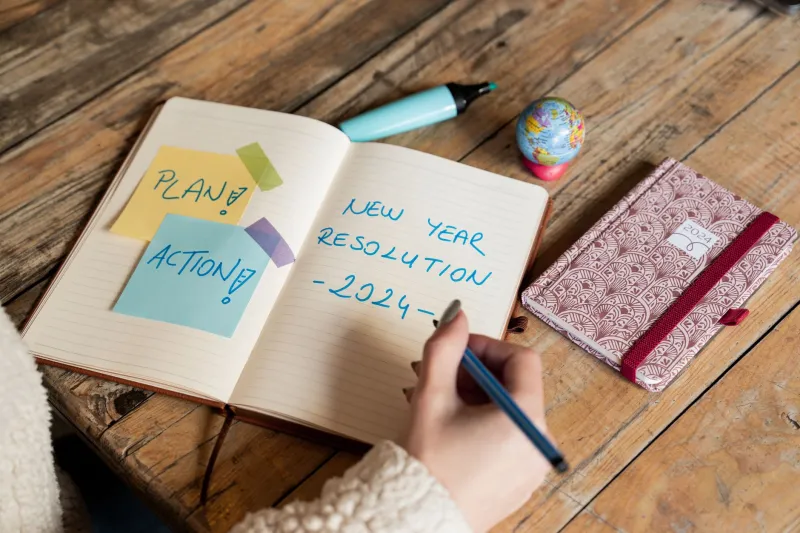
Somewhere between January's resolution hangovers and the slow crawl toward summer, something shifted. People stopped asking what do I want to accomplish this year and started asking a very different question: what do I want to have done by July 22?
It sounds small. It isn't.
For a growing number of Americans, July 22, 2025 has stopped being just a date on a calendar and started functioning as something closer to a personal organizing system — a single fixed point around which entire life plans have been quietly restructured. Gym goals, career pivots, relationship decisions, home projects, savings targets. All of it, somehow, funneled through one date.
The Date That Replaced the Year
Ask people what their goals are for 2025, and a lot of them will give you a July 22 answer.
"I told myself I wanted to have the kitchen renovation done before July 22," says Dana, a 34-year-old teacher from Columbus, Ohio. "I don't even fully know why that date specifically. It just became the finish line in my head."
She's not alone. Scroll through any productivity forum, personal finance community, or fitness app right now and you'll find the same pattern: people anchoring benchmarks, milestones, and deadlines to a date that, for many of them, carries enormous psychological weight — even if the specifics of why remain deliberately vague or wide open to interpretation.
Life coach and behavioral strategist Renee Alvarez, who works primarily with clients in Chicago and virtually across the Midwest, says she's noticed the shift in her practice since early spring.
"Normally, people come in with a one-year horizon or a quarterly framework," she explains. "This year, a lot of my clients showed up already oriented toward July. They had basically split the year in half and decided that July 22 was the midpoint that mattered."
Why a Countdown Works Better Than a Calendar
There's actual psychology behind why a specific, emotionally charged date can outperform a vague annual goal.
Dr. Marcus Webb, a behavioral psychologist based in Austin, Texas, points to what researchers call "temporal landmarks" — specific dates or events that the brain treats as psychological fresh starts or finish lines. Think of the way people treat Monday differently from Thursday, or January 1 differently from March 15. The more culturally significant a date feels, the more motivational weight it carries.
"July 22 has become a landmark for a lot of people, and that's doing real cognitive work," Webb says. "When a date feels significant — when there's cultural buzz around it, when other people are talking about it — your brain assigns it more urgency. That urgency can be incredibly useful for getting things done."
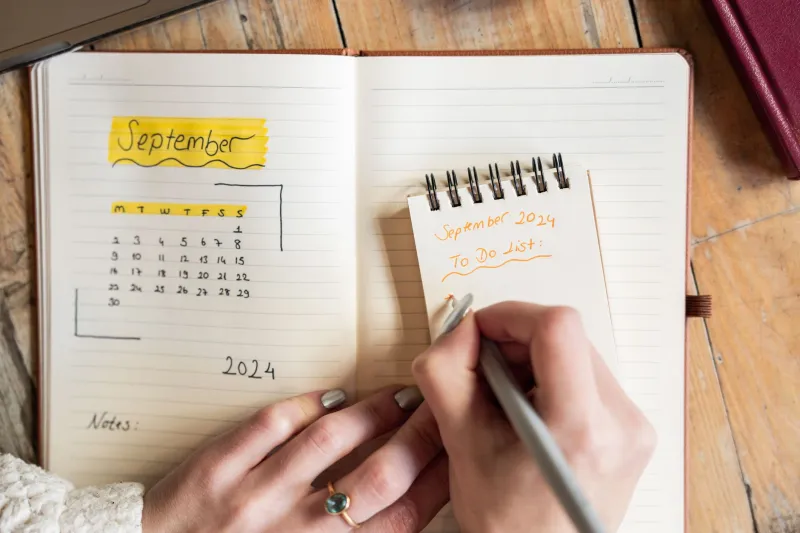
The countdown format amplifies this effect. Watching a number tick down, whether on a website, an app, or just in your head, creates a sense of shrinking time that flat calendar goals simply don't generate. "A resolution says someday," Webb notes. "A countdown says not much longer."
The Flip Side: Are We Just Outsourcing Our Priorities?
Not everyone is convinced the July 22 effect is entirely healthy.
Productivity consultant James Okafor, who works with teams at companies across the Southeast, raises a pointed question: when millions of people anchor their personal timelines to a shared cultural date, are they actually being more intentional — or are they just borrowing someone else's sense of urgency?
"There's a difference between I decided July 22 matters to me and July 22 feels important because everyone says it is," Okafor says. "The second one can make you really busy without making you any more purposeful. You end up running toward a finish line that someone else drew."
He's seen it in his corporate work too — teams that restructure entire project timelines around external hype cycles, only to find themselves burned out after the moment passes and the real, slower work still remains.
Dana, the Columbus teacher, admits there's some truth in that critique. "I think some of what I've been doing is just using July 22 as a reason to finally do things I'd been putting off anyway. Is that the date motivating me, or is it just a convenient excuse? Honestly, I'm not sure. But the kitchen is getting renovated, so."
The Calendar as a Before-and-After Story
One of the more fascinating things about the July 22 effect is how it has split the year — not just into two halves, but into two chapters. Before July 22 and after July 22. The setup and the payoff. The anticipation and the aftermath.
Life coach Alvarez says this narrative framing is part of what makes the countdown so psychologically compelling. "Humans are wired for story structure," she says. "We like a buildup. We like a turning point. July 22 is functioning as an act break for a lot of people — it's where they've decided the story shifts."
That can be energizing. It can also be limiting. When a single date becomes the organizing principle of your year, it can flatten everything that comes after it. Goals set for August or September can start to feel like afterthoughts — things that exist in the post-July 22 blur rather than in the vivid countdown window.
"I've had a few clients who are so focused on July 22 that they haven't thought at all about what they want from the second half of the year," Alvarez says. "The countdown ends. Life doesn't."
Making the Countdown Work For You
If July 22 has become your unofficial deadline, the experts suggest a few ways to make sure it's doing more good than harm.
First, audit the goals you've attached to it. Are they things you genuinely want, or things that feel appropriately "big" for a culturally significant date? There's a difference between a goal that fits your life and one that fits a narrative.
Second, plan for July 23. The post-countdown void is real, and the people who navigate it best are the ones who've already thought about what comes next. The date is a chapter break, not the ending.
Third, let the energy work for you without letting the date own you. The urgency is a tool. Use it to move faster on things that matter. But if July 22 becomes a source of anxiety rather than momentum, it might be worth stepping back and asking whose calendar you're actually living on.
The Date That Changed How We Measure Time
Here's what's genuinely remarkable about all of this: a single date, wrapped in anticipation and cultural momentum, has reshaped the way millions of Americans think about time, planning, and personal progress. That's not nothing. That's actually a pretty extraordinary thing for a calendar square to do.
Whether July 22 delivers on its promise — whatever that promise means to you — the way it's reorganized so many personal timelines says something interesting about how we use shared moments to find structure in our own lives.
The countdown was always bigger than the event. It turns out it was also bigger than the year.