Using July 22 as a Mirror: Why a Countdown Is Making Americans Rethink Everything
There's a moment in almost every big countdown where the excitement stops being entirely about the thing you're waiting for — and starts being about you. The date on the horizon becomes a kind of deadline, not just for whatever's launching or dropping or happening, but for the version of yourself you'd hoped to be by the time it arrived.
For a growing number of Americans, July 22, 2025 has become exactly that kind of mirror.
It sounds a little abstract, maybe even a little dramatic. But spend five minutes scrolling through the comments sections, Reddit threads, and group chats circling this date, and you'll notice something beyond the usual speculation and excitement. People are using July 22 as a checkpoint. A before-and-after marker. A surprisingly effective excuse — or motivation — to finally make a move they've been putting off for months.
Why Countdowns Do This to Us
Dr. Nadia Osei, a clinical psychologist based in Atlanta who focuses on motivation and behavior change, says this isn't as unusual as it sounds. "Humans are deeply wired to use external markers as internal anchors," she explains. "New Year's is the classic example, but honestly, any culturally significant date can serve that function if it carries enough collective energy around it."
The key ingredient, she says, is shared anticipation. When a date feels big to a lot of people simultaneously, it creates what she calls a "temporal landmark" — a point in time that the brain treats as a natural dividing line between past behavior and future possibility.
"July 22 has that quality right now," Osei says. "It's not just a date on someone's personal calendar. It's a date that millions of people are oriented toward at the same time. That collective momentum makes it feel more significant, which in turn makes people more likely to attach personal meaning to it."
Life coach Marcus Delray, who runs a practice out of Chicago and works primarily with professionals in their 30s and 40s, has noticed a noticeable uptick in clients bringing up the countdown — sometimes directly, sometimes as background context. "I've had people come in and literally say, 'I want to have made this decision before July 22,'" he says, laughing. "It's become a real thing. The date is functioning like a soft deadline for personal reinvention."
The Stories People Are Telling
Take Priya, 34, a marketing manager in Austin who asked that we use only her first name. She'd been circling a career change for two years — knew she wanted to move into UX design, had even started an online course twice before abandoning it. Then, about four months ago, she found herself deep in July 22 content online and had what she describes as a weirdly clarifying moment.
"I realized I'd been waiting for some big external thing to give me permission to change direction," she says. "And here was this date that everyone was treating like a turning point. I thought — okay, if July 22 is going to be a new chapter for whatever this is, it can be a new chapter for me too." She finished her certification last month.
Or consider Derek, 41, from Columbus, Ohio, who'd been in an on-again, off-again relationship for three years. He's somewhat sheepish about admitting it, but he says the countdown actually pushed him toward a conversation he'd been avoiding. "My partner and I kept saying 'we'll figure things out eventually.' And then we started joking about July 22 — like, what are we going to be doing when this whole thing goes down? And it turned into a real talk. We're engaged now."
Neither Priya nor Derek is under any illusion that July 22 itself is responsible for their choices. But both describe the countdown as something that created an unexpected sense of now.
The Psychology of "Before and After" Thinking
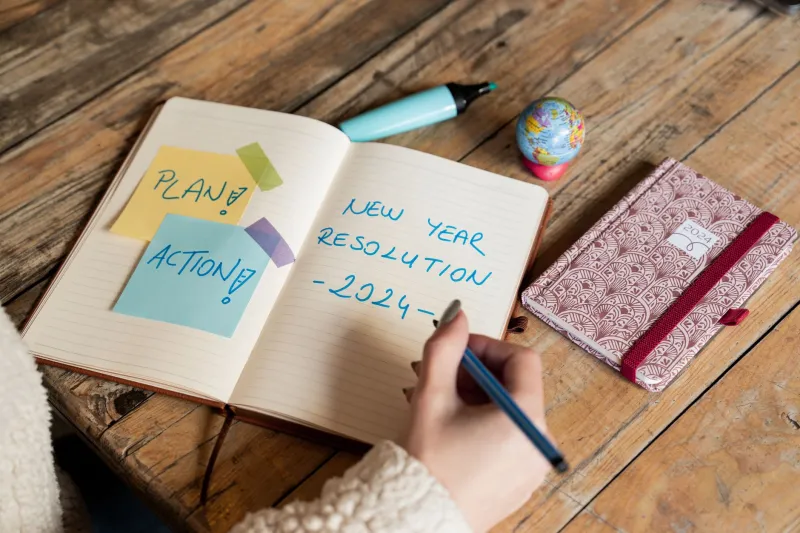
What's happening here has a name in behavioral psychology: it's called the "fresh start effect," a concept popularized by Wharton researcher Hengchen Dai and colleagues who found that people are significantly more likely to pursue goals following temporal landmarks — new weeks, new months, birthdays, and yes, culturally loaded dates.
The mechanism is relatively straightforward. When a date feels like a dividing line, it allows people to mentally distance themselves from past failures and frame the future as genuinely open. The slate feels cleaner. The excuses feel older.
Dr. Osei points out that what makes July 22 particularly potent is that it's not a personal milestone — it's a shared one. "Your birthday is a fresh start, but it's yours alone," she says. "When a date belongs to everyone, there's a social dimension to the motivation. People don't want to arrive at a collective moment still stuck in the same place."
Delray echoes that. "There's a subtle social pressure that comes with a big countdown, and it's not entirely a bad thing. Sometimes people need a little external nudge to take seriously what they already know they need to do."
When the Countdown Becomes a Crutch
Of course, not every July 22-inspired resolution is going to stick. Delray is candid about that. "I've seen people use countdowns as a reason to delay, too — like, 'I'll start after July 22, once all this is over.' That's the flip side."
The difference, he says, tends to come down to whether the date is being used as a launch point or a finish line. Using July 22 as a moment to begin something — a conversation, a habit, a decision — tends to be generative. Using it as a reason to wait tends to compound avoidance.
Dr. Osei adds that the post-countdown period is worth watching. "What happens after July 22 matters just as much as the buildup. If the date carries a lot of emotional weight and then the moment passes, people can experience a kind of motivational drop-off. The goal is to make sure the momentum outlasts the countdown."
What July 22 Is Really Counting Down To
Maybe the most interesting thing about this whole phenomenon is what it reveals about how Americans are feeling right now — a little restless, a little overdue, and oddly hungry for a reason to move.
July 22 is giving people that reason, even if the connection is mostly symbolic. And honestly? That might be the most human thing about any big cultural moment: it's never entirely about the thing itself. It's about what the waiting does to us, what we decide while we're watching the clock, and who we choose to be when the date finally arrives.
The countdown is almost up. What are you doing with it?