One Moment, 330 Million Clocks: The Digital Infrastructure Behind America's Most Anticipated Date
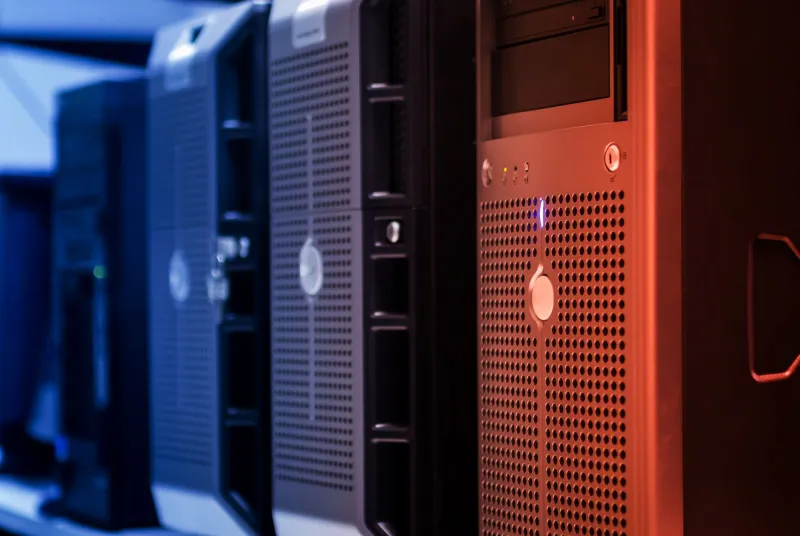
Somewhere in a data center outside of Dallas, a rack of servers started running unusually hot back in early June. Not because of a cyberattack, not because of a software glitch—but because millions of Americans had, more or less simultaneously, decided to set a countdown timer for July 22, 2025.
That's the part of this whole cultural moment that doesn't get talked about enough. We've spent a lot of time discussing what July 22 means—the anticipation, the theories, the merch—but almost no time asking what it's actually doing to the digital world underneath all of it. Turns out, the answer is pretty wild.
What Happens When a Nation Syncs Up
To understand the scale here, you have to think about how many small, individual digital actions are quietly adding up. Every time someone adds a July 22 reminder to their Google Calendar, that's a ping to a server. Every countdown widget embedded on a website, every push notification scheduled for 12:01 a.m. on the 22nd, every recurring social post queued up to drop at the same moment—all of it creates what engineers call synchronization load.
"Normally, internet traffic is beautifully chaotic," explains one infrastructure engineer who works with a major cloud hosting provider and asked not to be named because he wasn't authorized to speak publicly. "Requests come in from everywhere at random intervals. That randomness is actually a feature. It keeps things smooth. When you start removing that randomness—when everyone wants the same thing at the same second—the system doesn't always know how to handle it."
This isn't entirely new territory. New Year's Eve traffic spikes are well-documented. The Super Bowl halftime show causes measurable internet slowdowns every year. But those events are tied to passive viewing—people watching something happen. July 22 is different because the anticipation itself is the product. People aren't waiting to watch; they're waiting to find out. That distinction changes behavior in ways that stress-test platforms differently.
The App Developers Who Saw It Coming
A handful of independent app developers who build countdown and event-tracking tools noticed the July 22 effect months before most people were paying attention. One developer behind a popular countdown app—which he described as having "a few hundred thousand active users on a normal week"—said his dashboard started looking strange in late spring.
"I was seeing July 22 appear as a target date in our system more than any other single date in our history," he said over a video call, visibly still a little stunned by it. "At first I thought it was a bug. Then I started seeing it in our user forums, people were talking about it. And I realized: this is just... real."
He scrambled to add server capacity. He's not alone. Several major calendar and reminder platforms quietly pushed infrastructure updates in the past few months that were, at least in part, motivated by the anticipated traffic around this date. One product manager at a tech company (who also declined to be named) confirmed that July 22 showed up in their internal load-forecasting models as an anomaly requiring preparation.
"We're essentially treating it like a small-scale New Year's," she said. "Which is a sentence I never expected to say about a random Tuesday in July."
The Viral Timing Loop Nobody Planned
Here's where it gets genuinely strange. Because so many platforms and creators started talking about July 22 in their content, the algorithms that power social feeds began surfacing that content to more people—which caused more people to set reminders—which caused more platform activity around the date—which caused the algorithms to surface even more content about it. A self-reinforcing loop, basically.
Data analysts who track trending topics have a term for this: temporal clustering. It's when online behavior starts to bunch up around a specific moment in time, often for reasons that aren't entirely rational or traceable to a single source.
"What's interesting about July 22 is that the clustering happened before anyone even knew what they were counting down to," said one independent data analyst who runs a newsletter tracking social media trends. "Usually you need an anchor event—a product launch, a release date, something concrete. Here the countdown became the anchor. The mystery was the engine."
That mystery has kept the loop running. Every week that passes without a definitive explanation for why July 22 matters generates new speculation, new content, new reminders set by newly curious people. The date feeds itself.
What Your Phone Is Actually Doing Right Now
If you've got a July 22 reminder set—and statistically, there's a decent chance you do—your device is participating in something that has no real modern precedent. Scheduled notifications don't just sit passively on your phone; they're maintained through a constant, low-level communication between your device and the servers that power your calendar or app. Multiply that by tens of millions of users, and you've got a persistent, months-long background hum of digital activity all pointed at a single moment.
Some engineers find this philosophically interesting, almost poetic. "The internet usually doesn't have a heartbeat," one of them told us. "It just has noise. But right now, if you could listen to it, you'd hear something that sounds almost like anticipation. Like the whole network is holding its breath."
Others are more pragmatic about it. They're watching load balancers, stress-testing failover systems, and hoping their on-call schedules are properly staffed for whatever July 22 actually brings.
The Morning of the 22nd: A Stress Test Nobody Asked For
Here's what tech folks are genuinely nervous about: the moment the date actually arrives. When 50 million notifications fire within the same five-minute window, when every queued social post drops at once, when traffic to whatever July 22 turns out to be about spikes simultaneously across every major platform—that's the real test.
Some platforms will handle it gracefully. Others will slow to a crawl. There will almost certainly be some outages, some failed notifications, some frustrated users who couldn't access whatever they were counting down to in the first critical minutes.
In a weird way, that's kind of fitting. The whole July 22 phenomenon has been about collective experience—millions of people sharing the same anticipation, the same curiosity, the same low-grade excitement. If the internet hiccups a little under the weight of all that synchronized attention, it might just be the most honest thing it's ever done.
We're all in this together. Even the servers.
Curious about what's behind the July 22 date? Check out our full roundup of rumors, leaks, and theories right here on July-22-2025.com.